
We've been partnering with businesses across the Southeast since 1936, providing not just equipment but tailored advice to match your specific needs. If you're searching for Viking parts to maintain your setup, a robust Viking oil pump for lubrication systems, or versatile rotary vane pump options for consistent flow, our team is here to guide you. We stock over $1.5 million in inventory, ensuring quick access to positive displacement rotary gear pumps, rotary lobe pumps, rotary vane pumps, sealless mag drive pumps, metallic and non-metallic models, "Lid-Ease" strainers, O-ring pump seals, and more.
What sets us apart as Viking pump distributors? It's our commitment to engineering expertise. Our specialists can help you select the right model or even design a complete packaged system customized for your application. This means improved productivity, reduced downtime, and better overall performance for your operations in Georgia. Plus, with our focus on genuine Viking products, you avoid the risks of counterfeit parts that could lead to costly failures. Here, we'll explore how these solutions can work for you.
Explore the entire Viking Pump lineup and the support we provide throughout Georgia.
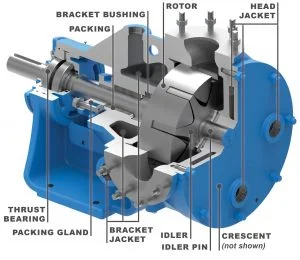
Maintaining your equipment starts with quality Viking parts, designed to withstand the rigors of daily use. From seals and bearings to rotors and housings, these components ensure your pumps operate at peak efficiency. For instance, Viking's precision-engineered parts help extend service life, often reducing maintenance needs by up to 20 percent in high-demand environments, as noted in technical guidelines from the manufacturer itself.
If you're dealing with wear and tear, our inventory includes replacement options that fit seamlessly into existing systems. We recommend regular inspections to catch issues early - something our service team can handle on-site in Georgia. For a deeper dive into specific Viking parts, explore our Viking pump replacement parts page now.
Viking oil pumps excel in scenarios where consistent lubrication or fluid transfer is critical, such as in power generation or petrochemical facilities. These pumps handle oils of varying viscosities, delivering reliable performance even under high pressure. According to the U.S. Department of Energy, energy savings of 20% to 40% or more are possible with pumping systems optimization in industrial settings.
In Georgia's humid climate, corrosion-resistant models like Viking's oil pumps prevent breakdowns, making them ideal for outdoor installations. We've helped clients integrate these into custom setups, ensuring smooth operation year-round. Interested in specialized options? Visit our page on Viking oil pumps for more information, or learn about fuel-specific variants at Viking fuel oil pumps.
Rotary vane pumps from Viking offer exceptional versatility for applications requiring gentle handling of shear-sensitive fluids, like in pharmaceuticals or food processing. Their self-priming design and ability to run dry for short periods make them a go-to choice for variable flow needs. In fact, rotary vane technology has been a staple in industrial pumping for over a century, with Viking leading innovations that enhance efficiency.
We carry a range of sizes and configurations to fit your setup, whether it's for metering, transfer, or circulation. Pair them with our engineering support, and you'll see optimized results tailored to your Georgia operation. For advanced models, see our coverage of the Viking Pump 4193 Series, which includes enhanced rotary vane features for demanding tasks.
To help you choose the right fit, here's a breakdown of popular Viking models based on their specifications. The GG Series is a rotary gear type with a compact design and high-pressure capability up to 500 PSI, making it suitable for general industrial uses and oil transfer, typically in the $500 to $1,500 price range. For applications like food processing or chemicals, consider the LQ Series, a rotary lobe pump featuring non-contacting lobes and easy cleaning, priced between $1,000 and $3,000. If you need something self-priming that handles both thin and viscous fluids, the RS Series rotary vane model works well for metering and lubrication systems, with costs from $800 to $2,000. The HL Series oil pump offers abrasion-resistant materials and sealless options, ideal for petrochemical or power plant environments, ranging from $600 to $1,800. Finally, the MD Series mag drive pump provides leak-proof and corrosion-resistant performance for hazardous fluids or pharmaceuticals, generally priced at $1,200 to $4,000.
This comparison draws from Viking's official catalog specifications to highlight differences in performance and suitability.
When deciding between a rotary vane pump and alternatives like gear or lobe models, consider your fluid type and operational demands. Rotary vane pumps use sliding vanes to create vacuum and pressure, ideal for low-to-medium viscosity liquids where quiet operation matters. They outperform gear pumps in self-priming but may require more frequent vane replacements in abrasive environments.
In contrast, Viking oil pumps (often gear-based) handle thicker oils with higher shear tolerance, while lobe pumps excel in sanitary applications due to their gentle action. A key advantage of rotary vane designs is their efficiency - up to 85 percent in optimal conditions, per industry standards from the Hydraulic Institute Hydraulic Institute Standards. To visualize, imagine a diagram showing vanes rotating within a cylindrical housing versus gears meshing tightly. For your setup in Georgia, our engineers can run simulations to recommend the best match.
What Are Viking Parts Made Of? Viking parts typically use high-grade materials like cast iron, stainless steel, or bronze for durability, depending on the model and application to resist corrosion and wear.
How Does a Rotary Vane Pump Work? A rotary vane pump operates by using vanes that slide in and out of a rotor, creating chambers that expand and contract to move fluid, providing consistent flow with minimal pulsation.
What Is the Difference between Viking Oil Pumps and Rotary Vane Pumps? Viking oil pumps are often gear-driven for viscous oils, while rotary vane pumps use vane mechanisms for broader fluid types, offering better self-priming but potentially lower pressure handling.
Where Can I Find Viking Pump Distributors in Georgia? As the official distributor, Pye-Barker serves the whole state with local inventory and expert support - contact us for immediate assistance.
How Do I Maintain Viking Pump Equipment? Regular checks on seals, lubrication, and alignment are key. We offer service and parts to keep your systems running efficiently and can also make repairs on your Viking Pump Equipment.
What Applications Are Best for Viking Rotary Vane Pumps? They're suited for metering, transfer in food, chemical, and pharmaceutical industries where gentle handling is needed.
Can Viking Pumps Handle Abrasive Fluids? Yes, with the right materials and configurations, many models are designed for abrasive or corrosive environments.
As leading Viking pump distributors in Georgia, Pye-Barker Engineered Solutions is your partner for top-tier equipment, parts, and support. Don't settle for downtime or inefficiency - reach out today for a personalized consultation, quick quote on Viking parts or oil pumps, or help with any of your industrial equipment needs. Schedule your pump assessment now and experience the difference reliability makes. Call now or request assistance via our online form - we're here to help your business thrive.