
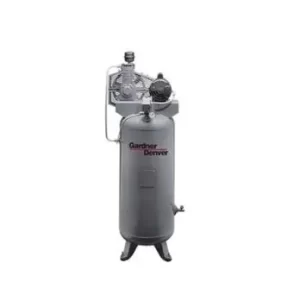
A true workhorse in industrial settings, a reciprocating air compressor delivers the durability and cost-effectiveness many operations need for lower pressure requirements. When your application calls for 30 HP or below, this proven technology often provides a practical, long-lasting solution that integrates smoothly into existing systems. At Pye-Barker Engineered Solutions, we supply the full range of Gardner Denver reciprocating models and help match the right equipment to your specific demands, whether you need a standalone unit or a complete packaged system. We also support complete compressed air systems when your needs extend beyond a single compressor.
Call our team at (404) 363-6000 or request a quote to discuss your requirements with an applications engineer who understands real-world conditions in Georgia and Florida.
Reciprocating compressors use a straightforward piston-driven process to increase air pressure. A motor - typically electric, though gas or diesel options exist for remote work - powers a crankshaft that moves pistons inside cylinders. On the intake stroke, the piston retracts and draws air in through the inlet valve. The compression stroke then forces the piston forward, reducing the air volume and raising its pressure before it exits through the discharge valve for immediate use or storage in a receiver tank.
This cycle repeats reliably, making the design especially effective where consistent performance matters without continuous high-volume demands. Gardner Denver engineers these units with robust components that hold up in challenging environments while keeping maintenance straightforward.
For a closer comparison of how reciprocating technology stacks up against other options commonly used in industrial settings, see our overview of rotary screw versus reciprocating compressors.
Gardner Denver offers reciprocating compressors in several configurations to match different operational needs. Single-acting models perform compression work on one side of the piston only, while double-acting designs use both sides for greater efficiency per revolution. Arrangements such as in-line cylinders suit linear setups, and V-shaped configurations improve airflow and cooling in more compact footprints.
Many models operate as single-stage or two-stage units. Two-stage designs compress air in the first cylinder to an intermediate pressure, cool it, then finish the process in a smaller second cylinder. This approach reduces stress on components and improves overall efficiency for higher pressure targets. For a closer look at two-stage operation and selection considerations, see our overview of two-stage reciprocating air compressors. If you are evaluating single-stage options specifically, our guide to single-stage reciprocating air compressors provides additional selection details.
These variations allow the same core technology to serve everything from light workshop use to heavier industrial cycles while maintaining the simplicity that keeps operating costs in check.
With multiple lines available, selecting the right Gardner Denver reciprocating compressor starts with understanding how each series performs under different conditions. Our engineers work with nearly every type of application and can guide you toward the most effective choice - whether for a single piece of equipment or a fully integrated system.
VP-Series: Built for electric or gas-driven needs, this line handles pressures up to 175 psig and suits operations that value straightforward, dependable performance.
CommandAir Series: A compact option engineered to industrial standards, it delivers pressures up to 125 psig while fitting spaces where footprint matters.
A Series: A heavy-duty choice available in single- or two-stage configurations, this series reaches pressures up to 350 psig for more demanding requirements.
Climate Control Reciprocating Compressor: Low operating RPM helps extend equipment life and reduce temperatures while still achieving pressures up to 175 psig.
Reward Reciprocating Compressor: A complete packaged unit that arrives with necessary accessories and supports maximum pressures up to 175 psig.
Paradigm Reciprocating Compressor: Designed for reduced vibration and lower noise levels - as low as 66 dBA - this model prioritizes efficiency and versatility across varied settings.
R-Series: Ideal for daily, extended operation, these units support single- and two-stage lubricated pumps and can be configured as tank-mounted or base-mounted.
RV-Series: The reed valve design offers a cost-effective solution that configures horizontally or vertically and manages pressures up to 175 psig.
PL-Series: Built for extreme-duty and remote locations, this line handles pressures up to 250 psig where conditions challenge standard equipment.
Engine Driven Compressors: Complete packages powered by gas or diesel engines that perform reliably in emergency production lines or off-grid locations without depending on electrical service.
If one of these descriptions aligns with your pressure, duty cycle, or installation constraints, reach out at (404) 363-6000, so we can confirm the best match and discuss available options for quick shipment.
Gardner Denver reciprocating compressors earn their reputation through practical advantages that matter on the floor. They typically carry lower initial installation costs and maintain efficiency even when running at partial loads. In no-load conditions, many models save energy by unloading rather than continuing to consume full power. Fewer moving parts compared with some other compressor technologies also contribute to reduced maintenance needs over time.
These characteristics make the design particularly well suited to intermittent or sporadic duty cycles common in many facilities. When operations do not require continuous high-volume air delivery, reciprocating units often provide reliable service without the complexity or energy overhead of alternatives. According to Gardner Denver, reciprocating compressors save energy in no-load conditions and operate efficiently at partial loads while requiring lower maintenance due to fewer moving parts.
Businesses across Georgia and Florida that value straightforward, durable equipment for lower pressure work frequently find these models align well with both performance goals and total cost of ownership, and our certified technicians can help you protect that advantage with proper ongoing care.
Choosing the right compressor involves more than matching a pressure rating. Duty cycle, available power source, noise constraints, space limitations, and future expansion plans all influence the decision. Our applications engineers have experience across a wide range of industries and can walk through the trade-offs so you invest in equipment that performs reliably without unnecessary features or limitations. You can also review practical steps for reducing long-term operating costs in our guide on optimizing compressed air system efficiency.
Whether you are replacing an aging unit, expanding capacity, or designing a new system, we help evaluate options and can support the full packaged solution when needed. Contact us today for personalized assistance in selecting equipment that fits your exact requirements.
As an authorized Gardner Denver distributor with locations serving Georgia and Florida, Pye-Barker Engineered Solutions provides more than equipment. We maintain local inventory for faster response, employ certified technicians for installation and service, and offer ongoing parts support to keep systems running. Our team understands the regional conditions and application challenges common in this area and works to deliver solutions that minimize downtime.
We also provide air compressor repair services when issues arise, and our team can help troubleshoot common Gardner Denver compressor problems quickly. For facilities looking to extend equipment life and reduce unexpected downtime, scheduled maintenance programs make a measurable difference.
From initial selection through startup and long-term maintenance, we aim to be a reliable resource for your compressed air needs. If your current setup could benefit from an upgrade or expert review, reach out now by dialing (404) 363-6000 to discuss how we can help.
What Is the Basic Operating Principle of a Reciprocating Air Compressor? A reciprocating compressor uses a piston moving inside a cylinder to draw in air on the intake stroke and compress it on the power stroke. The crankshaft, driven by an electric motor or engine, creates this linear motion. Valves control intake and discharge so compressed air moves efficiently to the point of use or storage.
How Do Single-Stage and Two-Stage Reciprocating Compressors Differ? Single-stage units compress air once to the final pressure. Two-stage models compress in a larger first cylinder, cool the air between stages, then finish compression in a smaller second cylinder. This staged approach often improves efficiency and reduces component stress when higher pressures are required.
Which Gardner Denver Reciprocating Models Work Best for Intermittent Duty? Most reciprocating designs handle intermittent or sporadic use effectively because they unload or stop between cycles without significant energy waste. Models such as the VP-Series, R-Series, and engine-driven packages are frequently chosen for applications that do not run continuously at full load.
What Maintenance Considerations Apply to These Compressors? Regular oil level checks, filter changes, and valve inspections help maintain performance. Because the design has relatively few moving parts, routine service is often straightforward. Our service team can provide scheduled maintenance or respond quickly when issues arise.
How Noisy Are Gardner Denver Reciprocating Compressors? Noise levels vary by model and installation. The Paradigm series, for example, operates as low as 66 dBA. Proper mounting, vibration isolation, and enclosure choices can further reduce sound in noise-sensitive environments.
Can These Compressors Operate in Remote or Extreme Conditions? Yes. Engine-driven packages and the PL-Series are specifically designed for remote locations or demanding duty where electrical service may be unavailable or conditions are harsh. Proper sizing and protection remain important for reliable long-term performance.
Where Can I Find Replacement Parts for Gardner Denver Reciprocating Compressors? Pye-Barker stocks or can quickly source genuine parts for the full Gardner Denver reciprocating line. Contact our parts team or visit the reciprocating compressor parts section of our site for assistance with your specific model.
When you need dependable equipment backed by local expertise, inventory, and service across Georgia and Florida, Pye-Barker Engineered Solutions is ready to help. Whether you are evaluating options for a new installation, replacing an existing unit, or seeking support for an operating system, our team can guide you to the right Gardner Denver reciprocating air compressor and keep it performing for years. Call (404) 363-6000 now to speak with an applications engineer or request a quote tailored to your operation.